See what is happening.
Review real customer cases and talk with the team. Trace the promise through the workflow.
You get findings, priorities, owners, and baseline measures.
Trust Stack consulting · Jay Mandel
I help businesses find where customer trust breaks down—and change the work that causes it.
Start with one problem: an unclear offer, a missed handoff, a complaint nobody owns. Leave with evidence, priorities, and a plan your team can use.
What a trustworthy business does
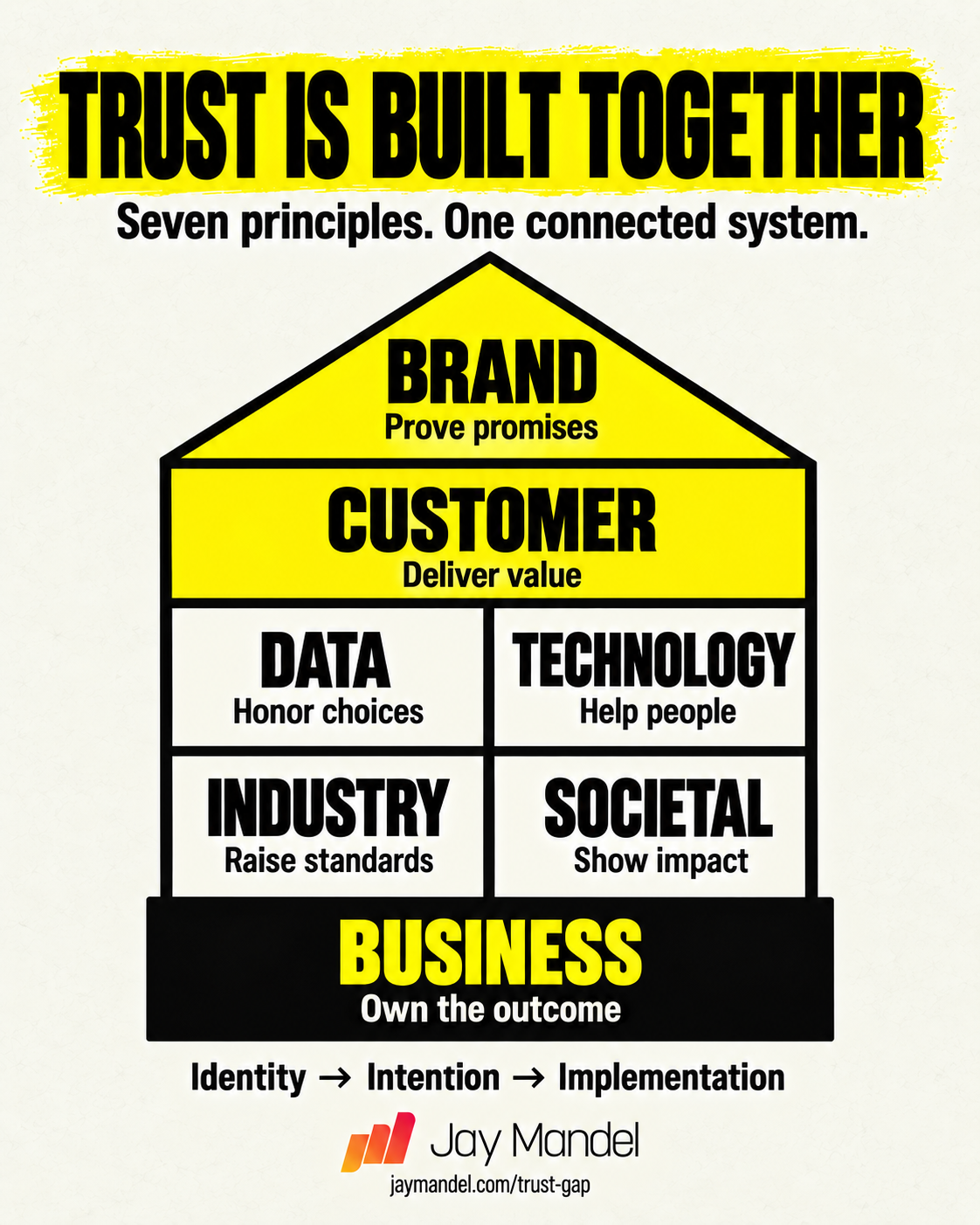
Your brand promise depends on what the whole business does. Customer service, data choices, technology, and leadership all affect the experience.
We use these seven principles to find the gap. Then we follow Identity → Intention → Implementation: clarify what you stand for, decide what you will deliver, and put it into practice.
For example: If customers keep chasing refunds, a better message alone will not fix it. We examine the policy, handoffs, systems, and person responsible for resolution.
Explore the seven principles ↗See how the gap between a company’s promise and a customer’s experience can be examined through TrustGap ↗.
From goodwill to evidence
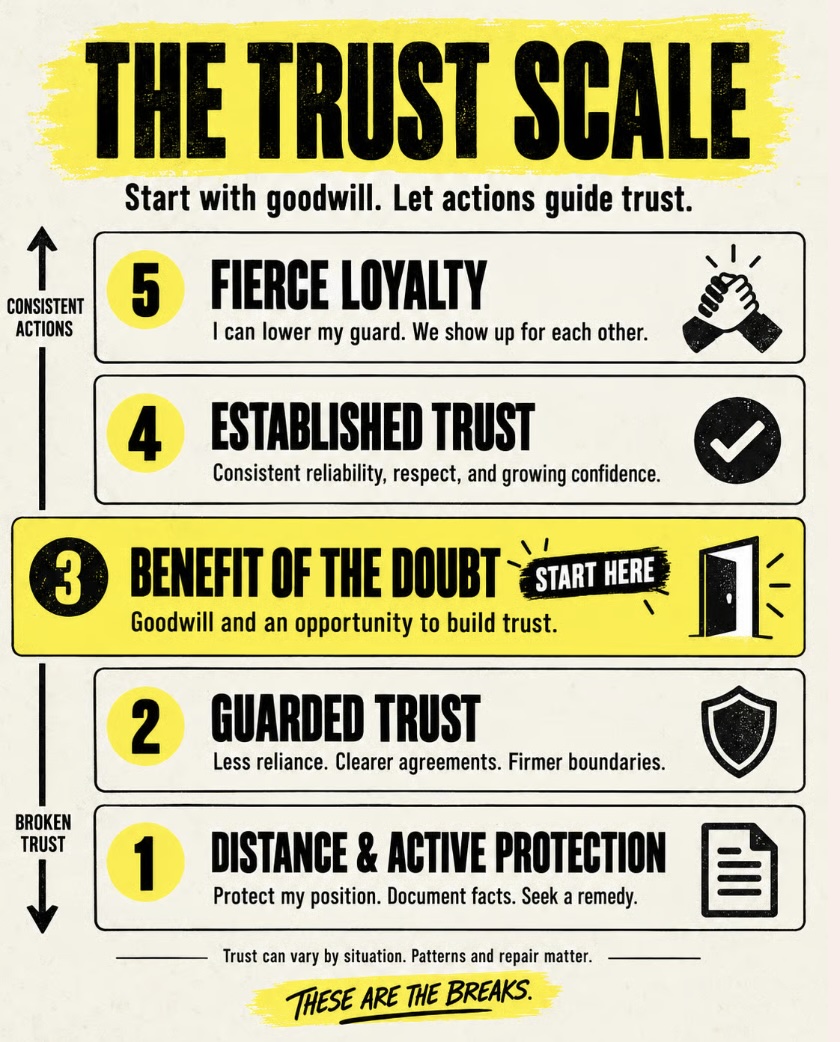
Start with goodwill. Let actions guide how much you rely on a person or company. Consistent follow-through builds confidence. Broken commitments call for clearer boundaries and repair.
The seven principles explain what a business needs to do. The trust scale helps you reflect on what its actions give you reason to expect.
Trust varies by situation. Patterns and meaningful repair matter. This is a reflection tool, not a validated assessment or independent rating.
Try the 3-minute trust check ↓
As a father, I want my children to know they can count on me. My job is to show up, listen, and follow through. Advocating for my family taught me what happens when a promise gets lost between people, processes, and responsibility.
I bring that same expectation to my work: keep your word, hear the concern, and own the outcome.
Read about fierce loyalty ↗Read MAC’s conversation with Aaron Ping on platform responsibility ↗Participate · about 3 minutes · no email required
Choose one person, partner, provider, or company. Answer from direct experience. A company is made up of people making decisions: examine its incentives, handoffs, and response—not only the person selling you the promise.
This reflection tool cannot establish that a person or company is safe or trustworthy. Results summarize your answers, not an independent investigation. Answers stay in this page’s memory and are not submitted or saved.
0 of 8 questions answered
Working together
Review real customer cases and talk with the team. Trace the promise through the workflow.
You get findings, priorities, owners, and baseline measures.Agree a separate scope. Improve handoffs, train people, and pilot the changes.
You get operating instructions, tested corrections, and a handover.Track repeat failures, resolution time, and customer feedback. Retest as the work changes.
You get a scorecard and next actions. Ongoing support is optional.These are the operating checks behind the consulting work. We scope the help your problem calls for.
Clarify your customer promise, business objective, approved claims, and limits on AI use.
What you receive: A customer promise and decision brief.
Give each role the knowledge, practice, and escalation instructions the work requires.
What you receive: Role-based training, realistic exercises, and job aids.
Fix unclear handoffs, approvals, exceptions, and points where a person needs to intervene.
What you receive: A revised workflow with owners and operating instructions.
Define the records needed to compare approved intent, permissions, disclosures, and actual behavior. Scope technical changes with qualified specialists.
What you receive: Evidence requirements and a technical implementation brief.
Name the owner across the full workflow, including suppliers. Agree escalation and recovery responsibilities.
What you receive: An ownership map and supplier action plan.
Review performance, record incidents, retest corrections, and reassess when tools, data, people, or AI permissions change.
What you receive: A scorecard, incident log, and review schedule.
My independent consulting draws on developing IAE and IEEE SA Industry Connections work. It is not an adopted standard, certification, or endorsement. Read the framework’s current status ↗
Start with one customer problem
Tell me what is happening, what you have tried, and what needs to change. We will agree a useful first step.
For leaders with access to the evidence and authority to act. Technical work gets its own scope and specialist.